Bihinga Wetland Rwanda: The Complete 2026 Guide to Musanze’s Hidden Birdwatching Paradise
Most visitors to northern Rwanda come for the mountain gorillas and move on. But just two kilometres from Musanze town, a quietly extraordinary ecosystem waits for those who look a little further: Bihinga Wetland, a community-protected papyrus swamp in the heart of the Albertine Rift that harbours critically endangered birds, shelters remarkable biodiversity, and offers one of Rwanda’s most genuine and unhurried eco-tourism experiences. If you have a morning to spare before or after your gorilla trek — and especially if you have binoculars — Bihinga deserves your full attention.
What is Bihinga Wetland?
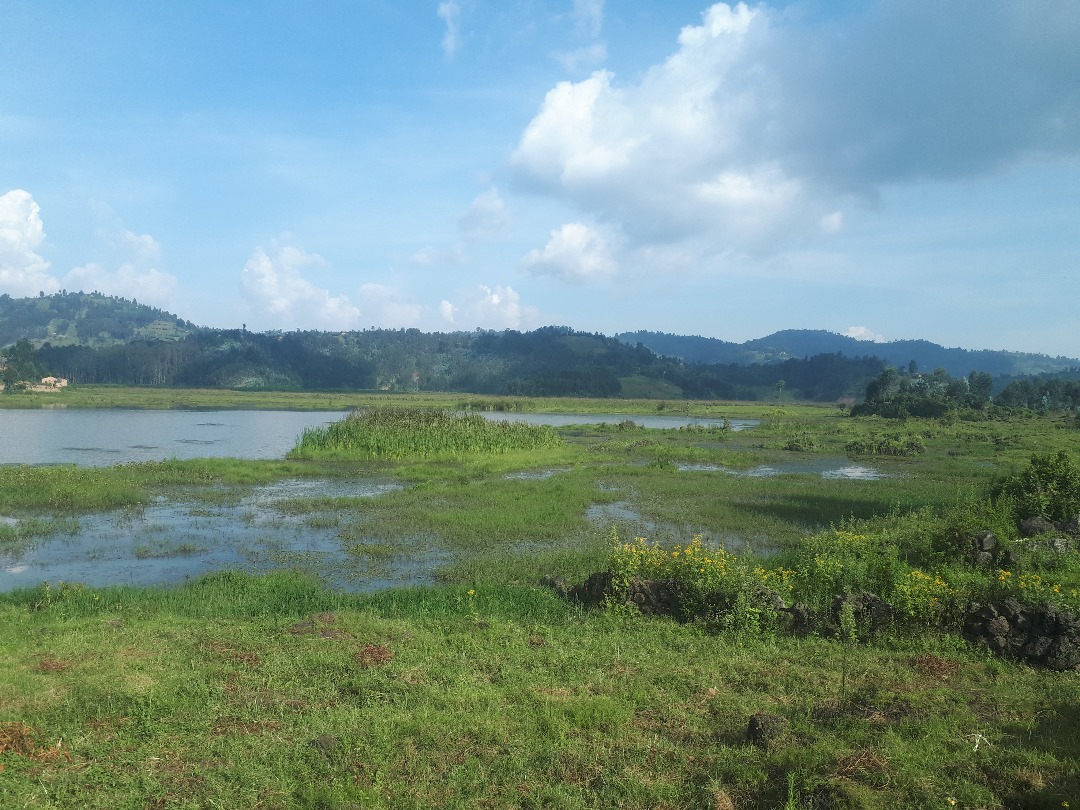
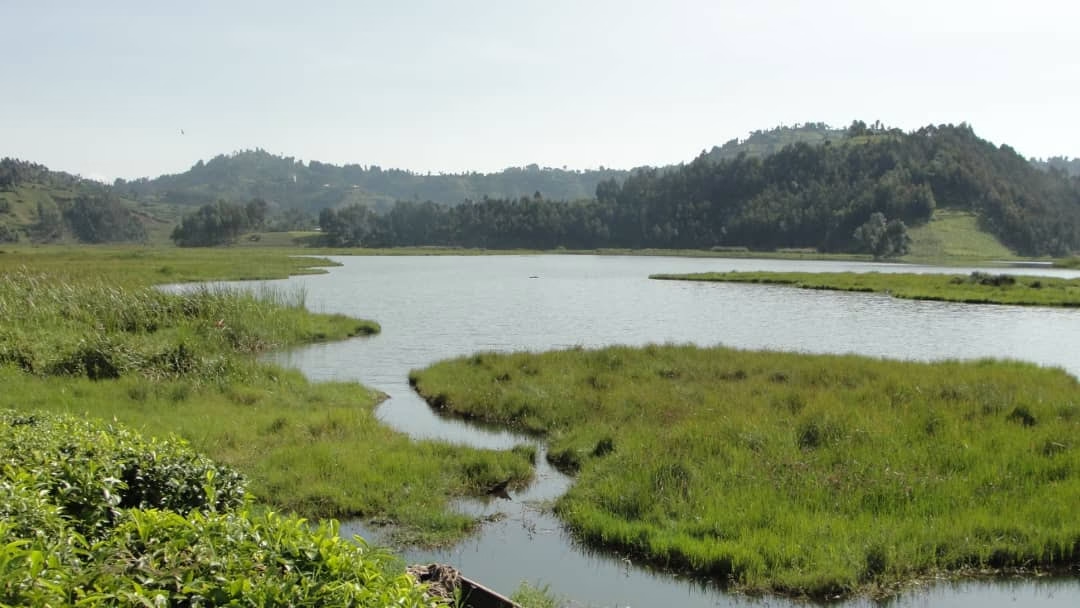
Bihinga Wetland — also known locally as Bihinga Swamp — is a community-protected papyrus wetland situated approximately 2 km east of Musanze town in Rwanda’s Northern Province. Covering several hectares of dense papyrus reed beds, shallow open water, and surrounding marsh vegetation, it forms part of the broader Albertine Rift ecosystem — a globally recognised biodiversity hotspot that stretches from Uganda and the DRC through Rwanda and Burundi into Tanzania.
The wetland sits in a natural valley between cultivated hillside farms, its dense green papyrus creating an abrupt and striking boundary between the agricultural landscape of the Musanze plateau and the wild interior of the swamp. Musanze’s volcanic soil and reliable rainfall keep the wetland permanently waterlogged throughout the year, maintaining the papyrus at heights that provide ideal nesting and foraging habitat for the bird species that depend on it.
What makes Bihinga particularly significant — beyond its ecological value — is the model of community stewardship that manages it. Unlike Rwanda’s large national parks, Bihinga is not a government-protected area. It is maintained by a youth-led local NGO and community conservation group who have taken responsibility for the wetland’s health, guiding visitors, running restoration projects, and educating surrounding communities about why protecting the swamp benefits them directly.
Birds of Bihinga — Complete Species Guide
Bihinga Wetland’s papyrus habitat is the primary reason serious birdwatchers make the detour from Musanze. Papyrus swamps are among Africa’s most specialised and threatened habitats, and the birds that depend on them have evolved in isolation over millions of years — producing a suite of species that exist nowhere else on Earth and that can only be reliably found in intact papyrus beds.
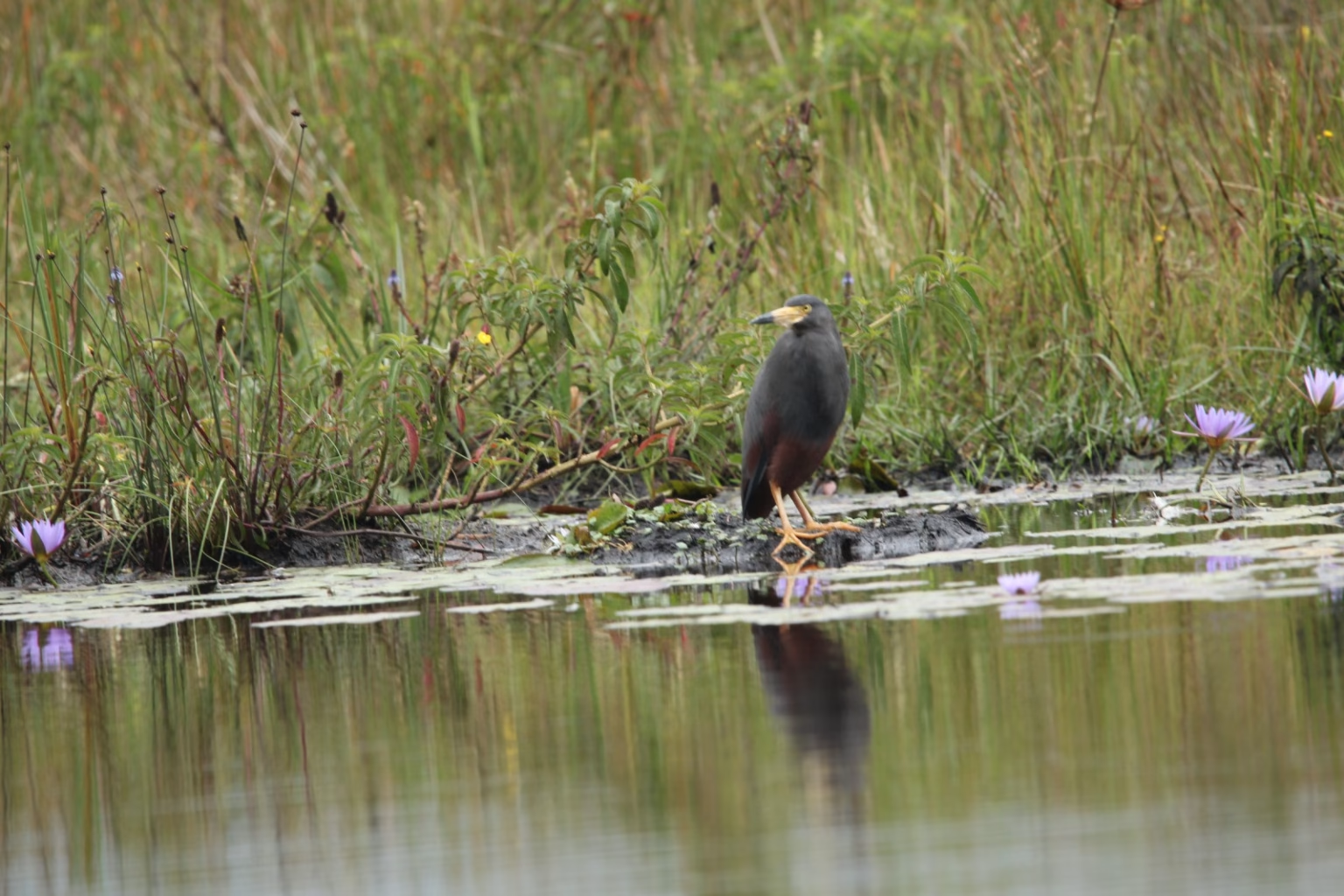
1. Grauer’s Swamp Warbler
The Grauer’s Swamp Warbler (Bradypterus graueri) is Bihinga’s most celebrated and most sought-after resident — a critically endangered, papyrus-endemic warbler found only in a handful of sites across Rwanda, Uganda, and the eastern DRC. It is a small, secretive, brown bird with a buffy underside that moves through the base of papyrus clumps with extraordinary stealth, more often heard than seen.
Its song — a rapid, mechanical churring repeated from the dense papyrus interior — is unmistakable once learned, and the patient observer who waits at the wetland edge in early morning will almost certainly hear it. Actually seeing the bird requires stillness, a good guide who knows the bird’s habits, and a measure of luck. But when it does emerge briefly onto an exposed papyrus stem, the sighting is intensely rewarding precisely because of its rarity.
The global population of Grauer’s Swamp Warbler is estimated at fewer than 10,000 individuals and declining as papyrus habitat across the Albertine Rift is drained, burnt, or encroached upon for agriculture. Bihinga represents one of its last accessible strongholds in Rwanda — a fact that makes community conservation here genuinely consequential for the species’ survival.
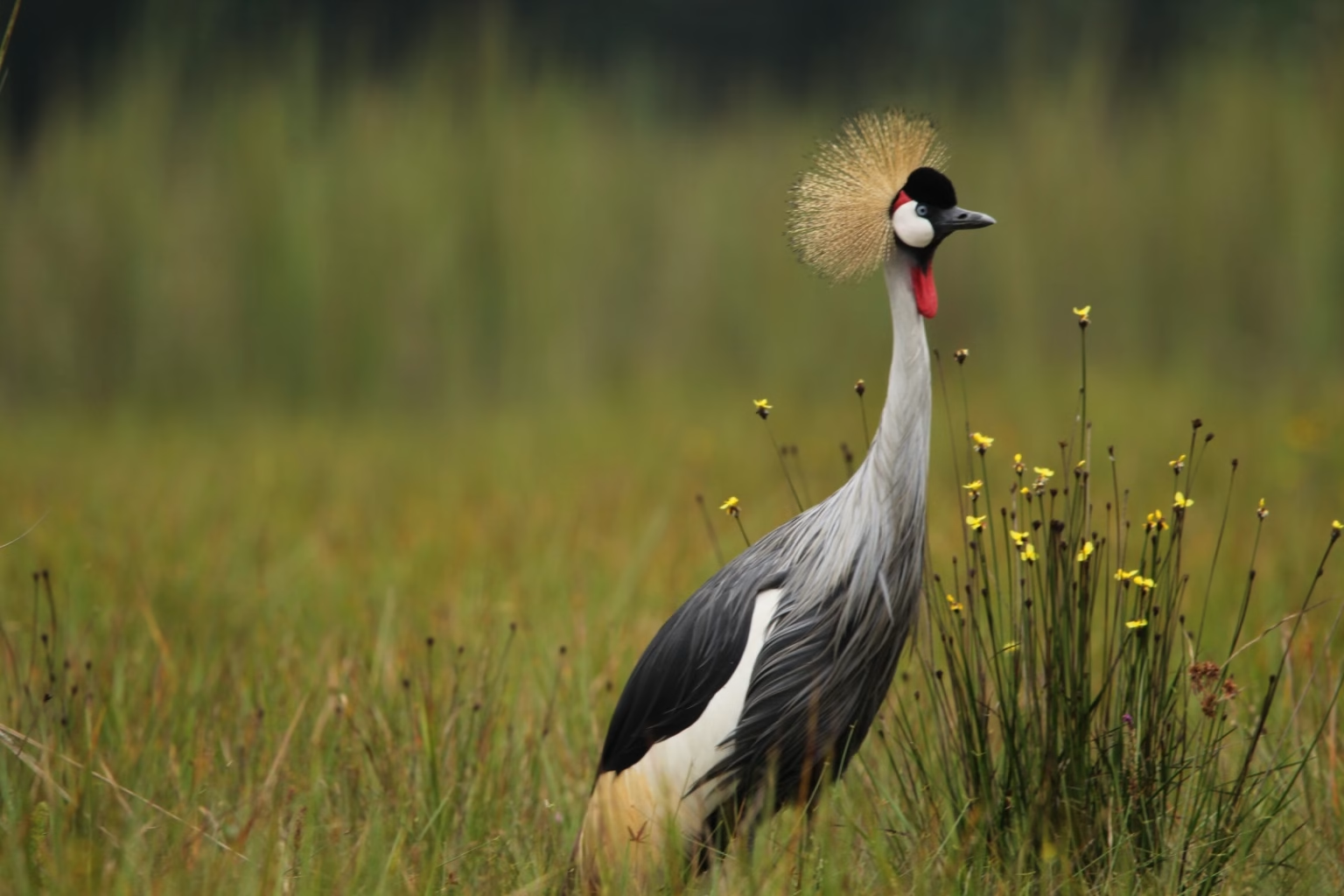
2. Grey Crowned Crane
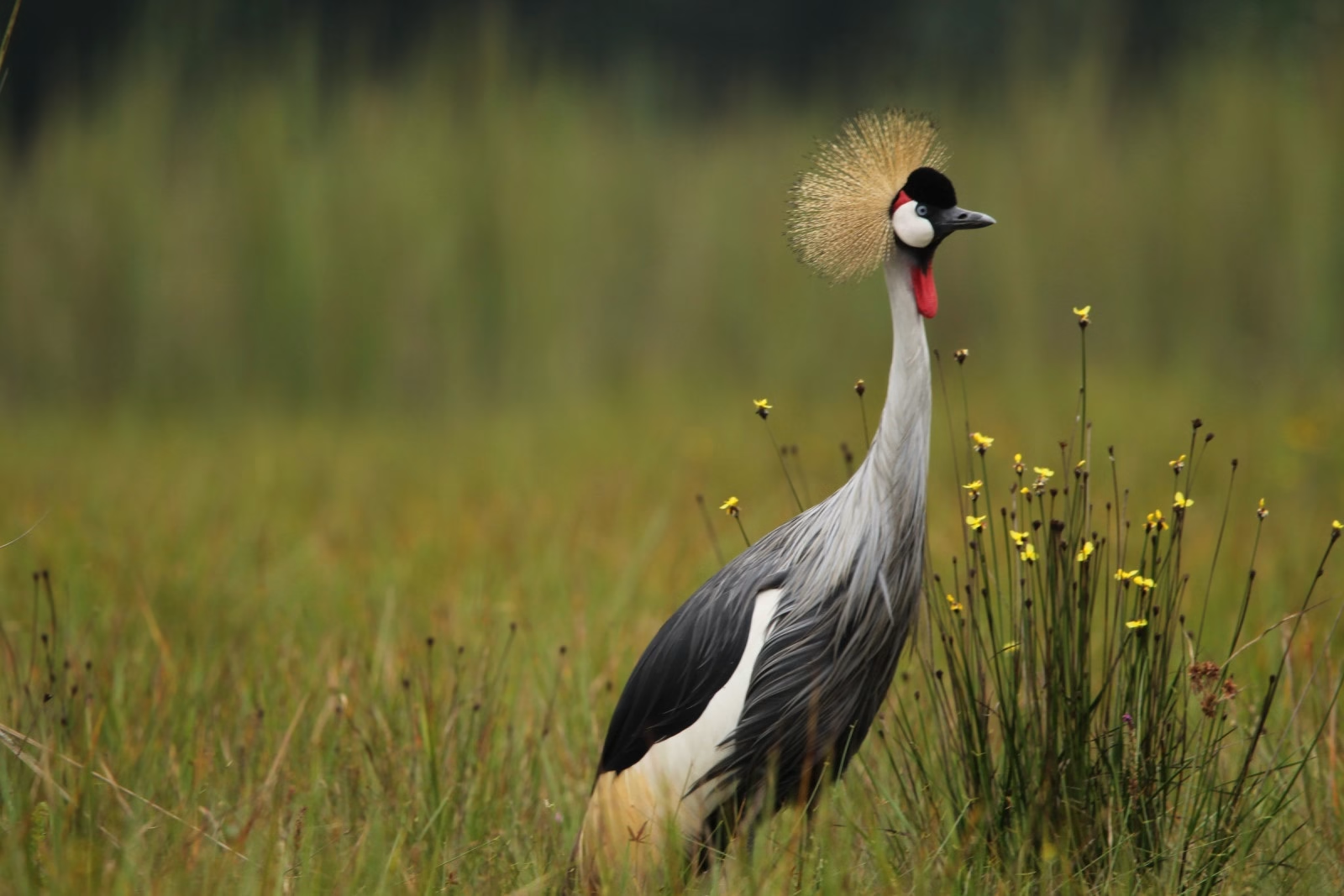
The Grey Crowned Crane (Balearica regulorum) is one of Africa’s most visually striking birds — tall, grey-bodied, with a brilliant golden crown of stiff feathers, red and white facial patches, and a white wing panel that flashes in flight. It is Uganda’s national bird, classified as Vulnerable by the IUCN, and its presence at Bihinga is one of the wetland’s most immediately rewarding sightings for first-time visitors.
Unlike the secretive Grauer’s Swamp Warbler, Grey Crowned Cranes are large, conspicuous, and often seen foraging in the open margins between the papyrus and the surrounding farmland. They are most commonly seen in pairs or small family groups, moving slowly through the shallows probing for insects, frogs, and plant material. Their calls — a distinctive booming honk — carry across the wetland and often betray their presence before they are seen.
The species has declined significantly across East Africa due to wetland drainage and capture for the pet trade, making sightings at intact wetlands like Bihinga increasingly valuable. A pair nests at or near the wetland annually, and chicks have been observed in the post-breeding season.
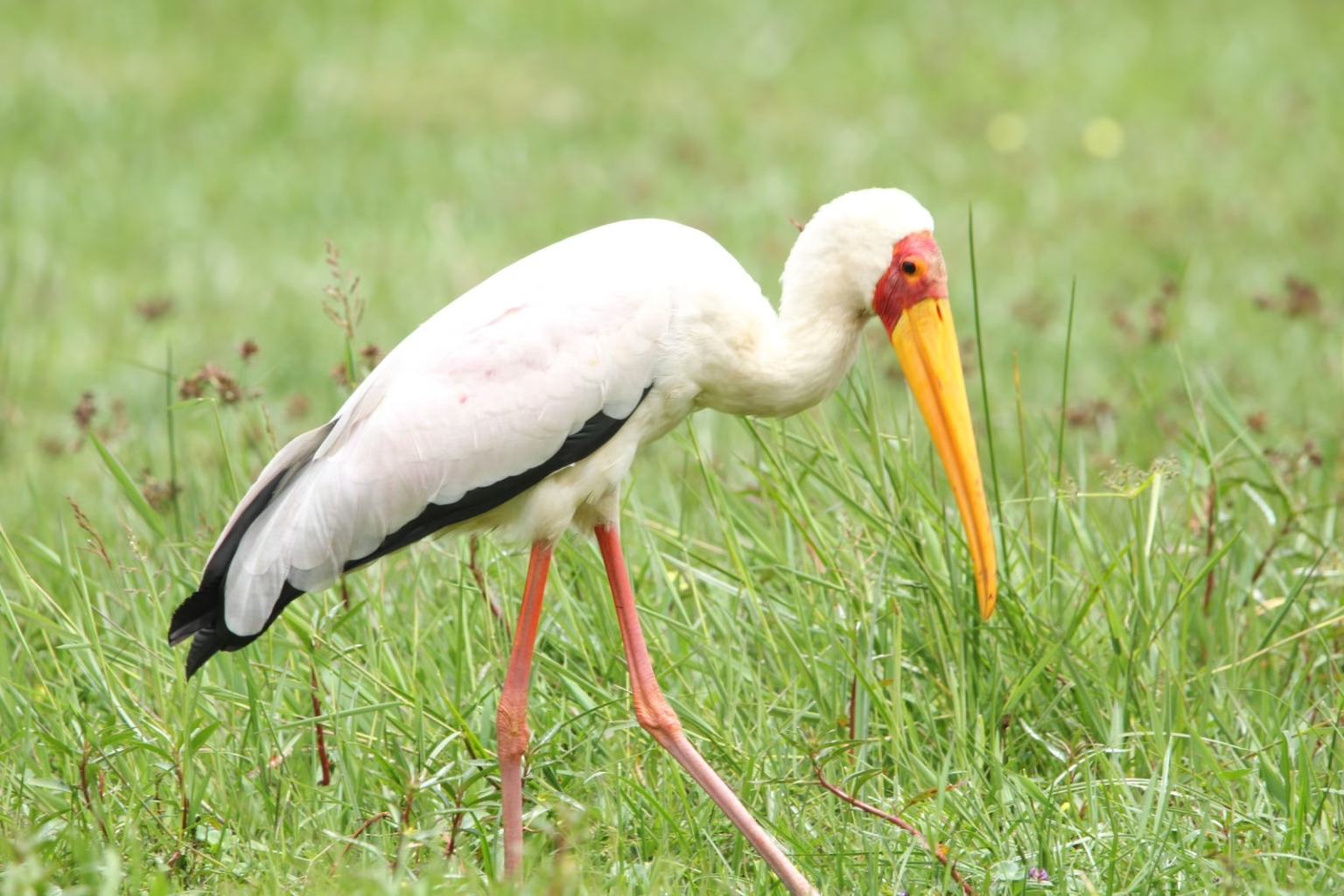
3. Yellow-billed Stork, Papyrus Canary & More
Beyond the headline species, Bihinga Wetland supports a rich supporting cast of waterbirds, wetland specialists, and Albertine Rift endemics that reward extended visits and careful observation.
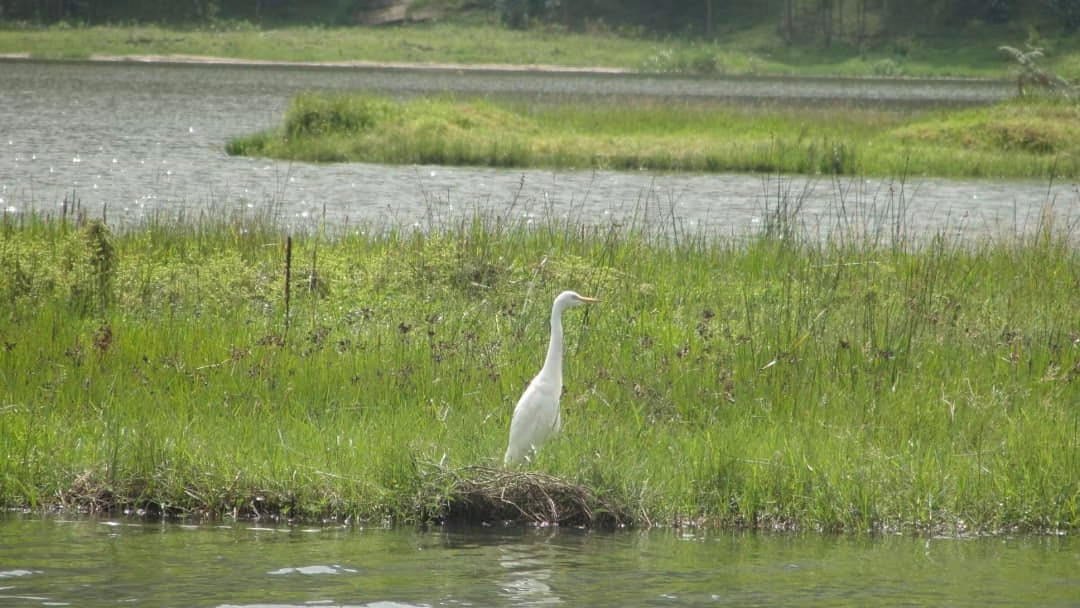
The Yellow-billed Stork is a large, white wading bird with a vivid yellow bill and pink-flushed plumage that catches light beautifully in early morning. It feeds by tactile sensation — sweeping its open bill through the water to detect small fish and frogs — and can sometimes be approached closely when focused on feeding. It is one of the most photogenic birds at Bihinga and almost guaranteed on a morning visit.
The Papyrus Canary (Crithagra koliensis) is another Albertine Rift endemic restricted to papyrus habitat — a small, streaked yellow-green finch that moves through the upper papyrus stems in small flocks. It is easily overlooked but is a genuine specialty of intact papyrus swamps and a meaningful tick for dedicated birders. The African Swamp Hen (also called Purple Swamphen) is large, purple-blue, and bold — often seen walking across floating vegetation at the wetland edge with its distinctive red shield and bill.
More Birds Regularly Recorded at Bihinga
- Hooded Vulture — Africa’s most threatened vulture; occasionally perches on dead trees near the wetland
- African Jacana — the remarkable “Jesus bird” that walks on floating lily pads using its extraordinarily long toes
- Malachite Kingfisher — brilliant turquoise and orange; perches over water channels in the papyrus
- Little Bittern — a tiny, secretive heron that freezes upright in the reeds when alarmed
- Black Crake — bold and approachable; often walks openly near the water edge
- Long-tailed Cormorant — dries wings on exposed papyrus stems after diving
- African Fish Eagle — the iconic call of Africa; nests in trees overlooking the wetland
Wildlife Beyond Birds
While birds are Bihinga’s primary draw, the wetland ecosystem supports a broader range of wildlife that adds depth to any visit. The papyrus beds and surrounding vegetation are home to several amphibian species, including reed frogs whose calls fill the wetland at dawn and dusk. The marsh mongoose — a semi-aquatic predator — has been observed along the wetland margins, and otters are occasionally reported by community guides, though sightings are rare and opportunistic.
Botanical interest is also significant. The papyrus itself (Cyperus papyrus) is a plant of considerable historical importance — ancient Egyptians made the earliest form of paper from it — and growing to heights of 4–6 metres at Bihinga, it creates a cathedral-like interior that is visually striking even for visitors with no particular interest in botany. The surrounding wetland edges support a variety of marsh plants, water lilies, and the introduced water hyacinth that management efforts are working to contain.
Community Conservation — The Human Story
Why Bihinga’s Community Story Matters
The conservation of Bihinga Wetland is not driven by a government agency or an international NGO. It is driven by a group of young Rwandans from Musanze who recognised that the wetland they grew up beside was under threat — from agricultural encroachment, papyrus harvesting for craft and fuel, and simple neglect — and decided to do something about it.
The youth-led organisation that now manages Bihinga operates a community ranger programme, runs environmental education workshops in local schools, undertakes papyrus restoration planting along degraded wetland margins, and manages visitor guiding as a direct income source for young community members. Every guided visit to Bihinga directly funds these programmes. Every entry fee stays within the community.
This model — sometimes called community-based natural resource management — is being replicated across Rwanda and increasingly recognised internationally as one of the most effective long-term conservation strategies available. When the people who live beside an ecosystem benefit directly from its protection, they become its most committed guardians. Bihinga is a working example of that principle.
For visitors, this means something tangible: the guide who leads your morning walk through the papyrus is not just a trained naturalist. They are a young Rwandan whose livelihood depends on the wetland being healthy and accessible, who understands its ecology from years of daily observation, and who can show you things a visiting researcher might miss entirely.
Activities at Bihinga Wetland
1. Guided Birdwatching Walk
The guided birdwatching walk is the core Bihinga experience and the activity that draws the majority of visitors. Starting at the wetland entrance, community guides lead groups along the papyrus margins and across wooden boardwalk sections, pointing out bird species, explaining the ecological dynamics of the swamp, and sharing the conservation history of the site.
A standard guided walk takes 2–3 hours at a comfortable pace. For serious birders, a dawn start (5:30–6:00 AM) and a 3–4 hour circuit maximises species encounters during the peak activity window. For casual visitors with an hour to spare before onward travel, even a 45-minute walk with a knowledgeable guide will produce 15–20 species including most of the headline birds.
Guides are stationed at the wetland entrance most mornings — no advance booking is strictly required for independent visitors, though calling ahead via the community contact number ensures a guide is available and allows the group size to be managed appropriately.
2. Wetland Photography
Bihinga Wetland is one of northern Rwanda’s most rewarding photography locations — and not only for bird photographers. The combination of the tall, sculptural papyrus silhouetted against morning light, the volcanoes of the Virunga chain visible on the northern horizon, the Grey Crowned Cranes wading in open shallows, and the mist that sits in the valley during early morning creates a landscape of extraordinary visual quality.
For bird photography specifically, the wetland’s compact size and accessible margins allow closer approach than most large protected areas. Species like the African Jacana, Black Crake, and Malachite Kingfisher can be photographed at relatively close range with a 300–400mm lens. The Grauer’s Swamp Warbler and Papyrus Canary require patience and a longer focal length, but when they do emerge from the papyrus the light conditions are often excellent.
3. Community Conservation Visit & Education Tour
Beyond the guided birdwatching walk, the community conservation team at Bihinga offers a longer experience that includes a tour of the restoration planting areas, a presentation on the wetland’s ecology and threats, and a conversation with community members about how they decided to take ownership of the wetland’s future. This extended visit takes approximately 3–4 hours and is particularly valuable for school groups, conservation students, and visitors with a specific interest in community-based conservation models.
Some visits also include a demonstration of traditional papyrus weaving — the wetland community has developed a craft programme that uses sustainably harvested papyrus to make baskets, mats, and decorative items sold to visitors. Buying these crafts supports the community income directly and gives you a meaningful souvenir with a genuine provenance story.
Best Time to Visit Bihinga Wetland
Bihinga is accessible and rewarding year-round, but season and time of day both significantly affect the quality of the experience.
June – September (Long Dry Season)
The best overall season for Bihinga. The ground around the wetland margins is firm underfoot, making walking comfortable. Bird activity is high and the papyrus is at its most stable. Early mornings are cool and clear. The Virunga volcanoes are often visible on the northern horizon — ideal for photography combining birds and landscape.
December – February (Short Dry Season)
Excellent conditions and fewer visitors than mid-year. The wetland is quieter, guides are more available, and the experience is more intimate. Many bird species are in breeding plumage during this period — Grey Crowned Cranes are particularly striking. Morning mist in the valley adds atmospheric quality to photography.
March – May (Long Rainy Season)
Heavy afternoon rains can make access tracks muddy and the wetland margins slippery. Morning visits (6–9 AM before rain arrives) are generally possible and bird activity is high. The papyrus is at its tallest and densest, making visible sightings harder but calls more frequent. Some migratory species pass through during this period.
October – November (Short Rains)
Short showers, usually in the afternoon. Morning visits are largely unaffected. Birdwatching can be excellent as intra-African migrants supplement the resident species. Good value and uncrowded. Wear waterproof footwear regardless.
How to Get to Bihinga Wetland
Bihinga Wetland’s greatest practical advantage is its proximity to Musanze — making it genuinely easy to combine with any northern Rwanda itinerary without significant detour.
| Origin | Distance | Travel Time | Best Option | Cost Approx. |
|---|---|---|---|---|
| Musanze town center | ~2 km | 20 min walk / 10 min moto | Walk, bicycle, or moto taxi | Free–1,000 RWF |
| Musanze accommodation | 1–4 km | 10–20 min moto | Moto taxi (ask hotel to arrange) | 1,000–2,000 RWF |
| Volcanoes NP headquarters (Kinigi) | ~10 km | 20–30 min by vehicle | Private vehicle or driver-guide | Included with driver |
| Kigali | ~115 km | 2.5–3 hrs by road | Private vehicle or express bus to Musanze, then moto | Bus: 3,000–4,000 RWF |
Practical Information: Fees, Hours & What to Bring
Essential Information for Visiting Bihinga Wetland
- Entry / guide fee: Approximately 5,000–10,000 RWF ($5–10 USD) per person, paid directly to community guides on arrival. Prices may vary — confirm current rates when booking.
- Opening hours: Open daily from dawn. Best visited 5:30–9:00 AM. Afternoon visits possible but less productive for birdwatching.
- Advance booking: Not strictly required for individuals, but recommended for groups of 4+ and essential for the extended conservation education programme. Contact the community group via your Musanze hotel or tour operator.
- Group size: Small groups (2–6 people) are ideal. Larger groups should be split to avoid disturbing sensitive species.
- Accessibility: The wetland edges are walkable on flat ground with minimal elevation change. Some sections involve walking on slightly uneven terrain. Not suitable for wheelchairs but manageable for most fitness levels.
- Photography: Permitted throughout. Flash photography should be avoided near nesting birds.
What to Bring to Bihinga Wetland
- Binoculars — 8×42 or 10×42 are ideal. Papyrus bird sightings are often brief and distant.
- Camera with zoom lens — 300mm minimum for bird photography; 400–500mm for the best results.
- Waterproof hiking boots or rubber-soled shoes — the wetland margins can be damp and muddy at any time of year.
- Lightweight long trousers — protect against papyrus edges, insects, and morning dew.
- Insect repellent — wetlands have mosquitoes, particularly in morning and evening. Apply before entering.
- Water bottle — bring at least 1 litre for a morning walk.
- Light rain jacket — even in dry season, morning mist and occasional showers occur at Musanze altitude.
- Merlin Bird ID app (downloaded offline) or a field guide to East African/Albertine Rift birds.
- Cash in RWF — guide fees are paid in cash. The nearest ATM is in Musanze town center.
What to Combine with Bihinga Wetland
Bihinga’s location near Musanze places it within easy range of some of Rwanda’s most celebrated attractions, making it a natural complement to a wider northern circuit rather than a destination requiring a separate trip.
🦍 Volcanoes National Park
Rwanda’s most famous park is 10–15 km from Bihinga. Combine an early morning Bihinga birdwatch (6–9 AM) with an afternoon gorilla or golden monkey trek. Or visit Bihinga the afternoon after a dawn gorilla trek. The parks complement each other perfectly across a 2-day Musanze stay.
🌊 Twin Lakes of Burera & Ruhondo
Two of Rwanda’s most spectacular volcanic lakes lie 20–30 km northeast of Musanze, accessible by paved road. The drive offers outstanding views of the Virunga volcanoes. Combine a morning at Bihinga with an afternoon kayaking or boat trip on the lakes for a full day of nature.
🕳️ Musanze Caves
Located just outside Musanze town, the Musanze Caves are a 2 km network of lava tubes formed by ancient volcanic activity. A guided tour takes 1–2 hours. Combine with Bihinga in the same half-day — birdwatch at the wetland from 6 AM, then visit the caves after breakfast for a morning of varied Musanze experiences.
🌋 Dian Fossey Museum & Research Centre
The recently opened Dian Fossey Gorilla Fund museum in Musanze tells the story of gorilla conservation and the woman who dedicated her life to it. Combine with an afternoon visit after a morning at Bihinga for a day that covers both Rwanda’s conservation community work and its international gorilla research legacy.
🏘️ Community Village Tours
Several community tourism operators in Musanze offer guided walks through local villages with visits to farming families, craft workshops, and traditional cooking demonstrations. Combine with a Bihinga morning for a day that balances wildlife and cultural immersion — both within a short distance of Musanze center.
🐦 Rugezi Marsh
Rwanda’s other major papyrus wetland near Lake Bulera, about 40 km from Musanze. A longer, more remote wetland with its own bird community. Serious birders completing a northern Rwanda circuit can visit both wetlands — Bihinga as the accessible introduction, Rugezi as the more immersive expedition.
Sample Itineraries Including Bihinga Wetland
Half-Day: Bihinga + Musanze Caves
- 5:45 AM: Moto taxi from Musanze hotel to Bihinga Wetland entrance
- 6:00–8:30 AM: Guided birdwatching walk — target Grauer’s Swamp Warbler, Grey Crowned Crane, Yellow-billed Stork
- 9:00 AM: Return to Musanze for breakfast at a local café
- 10:30 AM: Guided tour of Musanze Caves (1.5 hrs)
- 12:30 PM: Lunch in Musanze; afternoon free for Volcanoes NP visit or onward travel
Full Day: Bihinga + Twin Lakes + Village Tour
- 5:45 AM: Depart hotel for Bihinga Wetland
- 6:00–9:00 AM: Extended guided birdwatching and photography session
- 9:30 AM: Breakfast in Musanze
- 11:00 AM: Drive to Twin Lakes of Burera and Ruhondo (30 min)
- 11:30 AM–1:00 PM: Boat trip or kayaking on Lake Burera; lakeside lunch
- 2:30 PM: Community village tour near Musanze (1.5 hrs)
- 5:00 PM: Return to Musanze; dinner; overnight
2 Days: Gorillas + Bihinga Northern Circuit
- Day 1, 5:00 AM: Depart Kigali for Musanze (2.5 hrs); settle into lodge
- Day 1, 9:00 AM: Gorilla trekking briefing and trek at Volcanoes National Park
- Day 1, afternoon: Return to Musanze; optional Dian Fossey Museum visit; lodge dinner
- Day 2, 5:45 AM: Early moto to Bihinga Wetland for dawn birdwatching
- Day 2, 9:00 AM: Breakfast; Musanze Caves or Twin Lakes afternoon
- Day 2, 3:00 PM: Return drive to Kigali (arriving by 6 PM)
Other Wetlands Worth Visiting in Rwanda
🌿 Rwanda’s Wetland Ecosystem — Beyond Bihinga
Rugezi Marsh
Near Lake Bulera, northern Rwanda. Over 40 bird species. More remote than Bihinga — best for serious birders on a dedicated wetland day. A papyrus specialist’s second destination after Bihinga.
Nyandungu Urban Wetland Eco Park
In Kigali — Rwanda’s most accessible wetland. Restored urban wetland with walking trails, botanical garden, and education centre. Good for a Kigali rest day or with children.
Kamiranzovu Marsh (Nyungwe)
High-altitude marsh within Nyungwe Forest National Park. Exceptional birding including rare papyrus specialists. Reached via a 4-hour guided trail from Uwinka visitor centre.
Lake Kivu Shoreline Wetlands
The lake’s shallows and shoreline vegetation support waterbirds including kingfishers, herons, and cormorants. Best explored by boat from Gisenyi or Kibuye.
Akagera Wetlands
Lake Ihema and associated papyrus zones within Akagera National Park hold Shoebill (rare), Sitatunga antelope, and exceptional waterbird diversity — best accessed by boat safari from the park.
Lake Burera & Ruhondo
The twin volcanic lakes near Musanze support shoreline wetland birds and are particularly good for Grey Crowned Crane. Easily combined with a Bihinga visit in the same day.
Frequently Asked Questions: Bihinga Wetland Rwanda
What is Bihinga Wetland in Rwanda?
Bihinga Wetland — also known as Bihinga Swamp — is a community-protected papyrus wetland approximately 2 km from Musanze town in northern Rwanda. It is part of the Albertine Rift biodiversity hotspot and is one of Rwanda’s most important accessible habitats for rare and endemic birds, including the critically endangered Grauer’s Swamp Warbler.
What birds can you see at Bihinga Wetland?
Bihinga is known for the Grauer’s Swamp Warbler (critically endangered, papyrus endemic), Grey Crowned Crane (Vulnerable, Uganda’s national bird), Papyrus Canary (Albertine Rift endemic), Yellow-billed Stork, African Swamp Hen, African Fish Eagle, Malachite Kingfisher, and African Jacana. Over 40 species have been recorded, including 7 Albertine Rift endemics.
How do you get to Bihinga Wetland from Musanze?
Bihinga Wetland is approximately 2 km from Musanze town center — accessible on foot in 20–25 minutes, by bicycle, or by moto taxi in under 10 minutes. Any moto driver in Musanze will know the location. The site is also signposted from the main Musanze–Kinigi road.
What is the best time to visit Bihinga Wetland?
Arrive at dawn (5:30–6:00 AM) for the best bird activity. The dry seasons — June to September and December to February — offer the best ground conditions. Early morning visits produce far more sightings than afternoon visits regardless of season, as most papyrus birds retreat into the dense reed interior by mid-morning.
How much does it cost to visit Bihinga Wetland?
Community guide fees are approximately 5,000–10,000 RWF ($5–10 USD) per person, paid directly to guides on arrival. No formal national park permit is required. Prices should be confirmed with local operators in Musanze before visiting, as community fee structures may be updated.
Can you combine Bihinga Wetland with Volcanoes National Park?
Absolutely — this is one of the best combinations in northern Rwanda. Visit Bihinga from 6–9 AM, then continue to Volcanoes National Park for gorilla or golden monkey trekking in the late morning or afternoon. Alternatively, visit Bihinga the morning after a gorilla trek. Both sites are within 15 km of each other via Musanze.
Is Bihinga Wetland suitable for non-birdwatchers?
Yes. While birders get the most from a Bihinga visit, the wetland offers genuine interest for anyone who enjoys nature, landscape photography, learning about community conservation models, or simply experiencing an ecosystem that feels very different from Rwanda’s highland hills. The community storytelling element — how local youth organised to protect the wetland — is compelling regardless of your interest in birds.
Do I need a guide at Bihinga Wetland?
A guide is strongly recommended and arranged through the community conservation group. Beyond identifying species, community guides know exactly where target birds are likely to be on any given morning, understand the wetland’s seasonal dynamics, and their income directly supports the conservation work that keeps the wetland healthy. Visiting without a guide misses most of what makes Bihinga special.
What other wetlands can I visit in Rwanda?
Rwanda’s other notable wetlands include Rugezi Marsh near Lake Bulera (birding), Nyandungu Urban Wetland Eco Park in Kigali (accessible, family-friendly), the Kamiranzovu Marsh within Nyungwe Forest (papyrus specialists), and the wetland zones of Akagera National Park around Lake Ihema (Shoebill, Sitatunga, boat safaris).
Bihinga Wetland rewards the traveller who slows down, wakes early, and looks beyond the obvious. In a country celebrated for mountain gorillas and big safari landscapes, it offers something quieter and rarer: a small, ancient, community-held ecosystem where critically endangered birds call from the papyrus at dawn and the young Rwandans who protect them are among the most knowledgeable guides you will meet anywhere in Rwanda.